The Unique Residents of Tuzly Estuaries
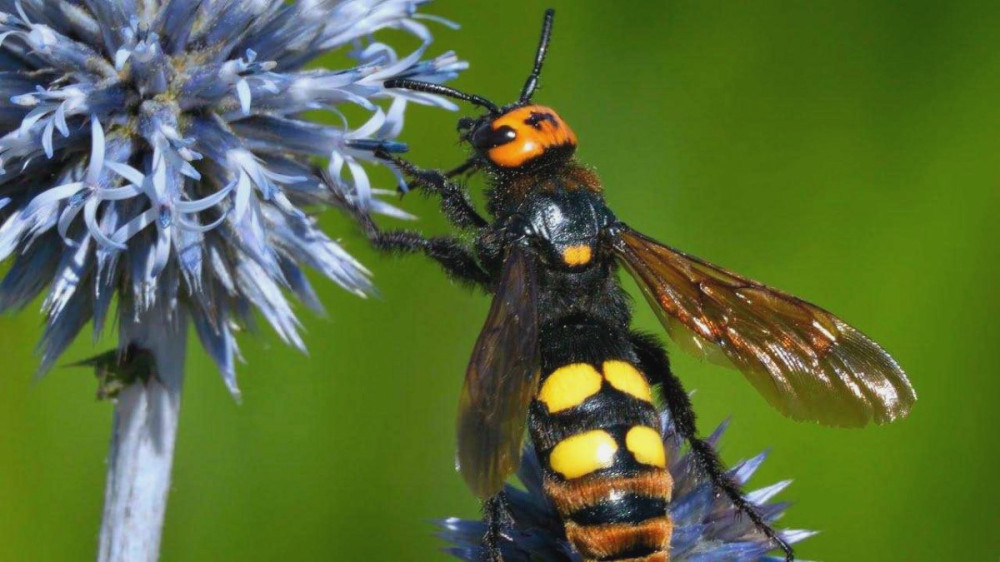
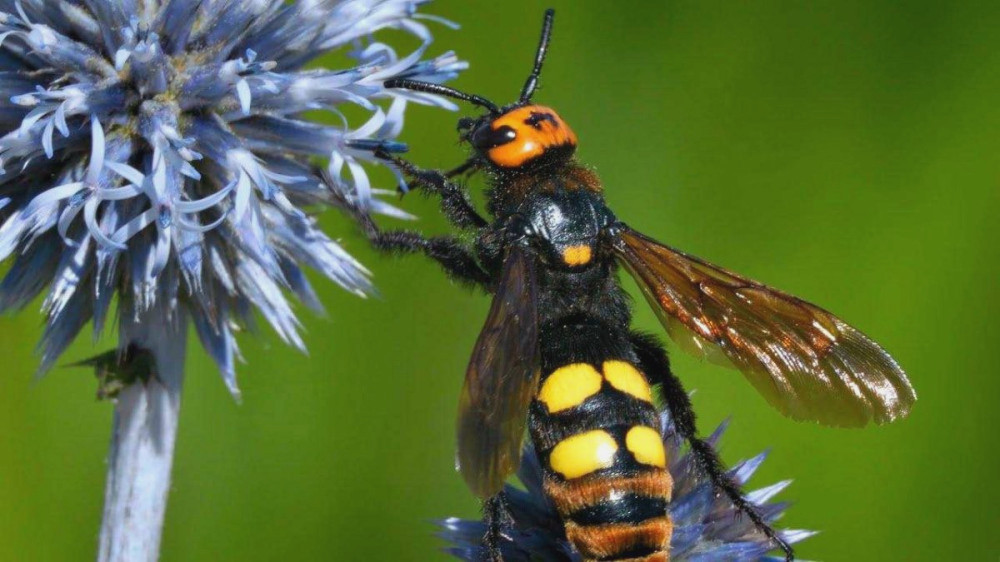
Within the National Nature Park “Tuzly Estuaries” in Odessa, one can encounter a rare insect listed in the Red Data Book of Ukraine and Europe – the giant wasp (Megascolia maculata). This remarkable insect was recently photographed on blooming flowers. This was reported by biologist Ivan Rusyev on his social media page.
According to Ivan Rusyev, the giant wasp leads a dual lifestyle: in its larval stage, it is a parasite, while in the adult phase (imago), it becomes a phytophage, feeding on plant matter. All scolias are diurnal creatures. They spend the night buried in litter and emerge at dawn to feed on flowering plants. Due to their short proboscis, they can only access nectar from flowers with shallow corollas, such as asters and umbellifers.
Despite its intimidating appearance, this rare wasp does not pose a significant threat to humans. Its venom is much weaker than that of common wasps. The scolias use their venom not for nest protection but to paralyze the host larva (for instance, a rhinoceros beetle), on which they lay their eggs. The egg overwinters in the soil and transforms into a pupa in spring.