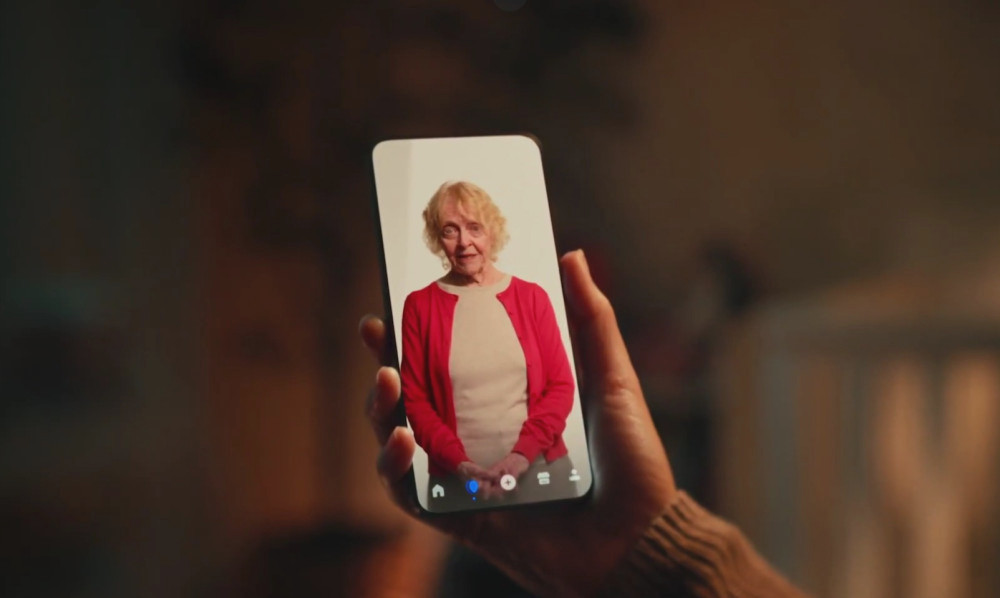
Innovative App for Interacting with Digital Avatars of Deceased Loved Ones
The Los Angeles startup 2Wai has launched a mobile application that enables users to create interactive digital avatars of deceased family members. This is reported by Interesting Engineering.
A promotional video released by co-founder Calum Worthy quickly gained traction on social media, amassing over 28 million views.
The video showcases a pregnant woman communicating via phone with a recreation of her deceased mother. The narrative further illustrates how, after some time, the avatar reads a bedtime story to an infant, and later, as the child grows into a school-aged kid, converses with the digital "grandma" on the way home. The video concludes with a scene where the adult son informs the avatar that she will become a great-grandmother.
It is noted that creating an AI avatar requires scanning a person using a smartphone camera. Once set up, users can converse with the double: HoloAvatar mimics human communication through voice, facial expressions, and gestures.
The app is available in the App Store under the name HoloAvatar. According to the company, the generated images "look and talk like you and can also recall memories." Worthy stated that the platform is forming a "living archive of humanity" and encouraged users to try the beta version. Developers also announced that an Android version will be available soon.
The emergence of the service has sparked active discussions. Some commentators on social media have labeled the technology as "creepy" and "unacceptable," while calling the developer a "psychopath." The app is often compared to the episode "Be Right Back" from the series "Black Mirror," where a grieving woman uses an AI copy of her deceased partner. Others believe the program may distort the process of grieving.
Critics emphasize the risks of replacing genuine sorrow with artificial comfort and raise questions about the ethical boundaries of such technologies. Meanwhile, some users have positively assessed the ability to preserve the voices and stories of loved ones.
The discussion surrounding the app also touches on broader issues related to the development of artificial intelligence. Experts warn that as robotics improve, physical versions of such avatars may become possible, raising questions about identity, consent, and the commercialization of human grief.
Currently, the app continues to spread among users, and the discussion about its impact on memory and the grieving process remains open and actively ongoing.