Starlink's New Era: Third Generation Satellites
Starting in 2026, SpaceX will launch its third-generation Starlink satellites. Each satellite will provide over 1 Tbps download speed and 200 Gbps upload speed.
The new equipment will utilize advanced computers, modems, and beamforming systems, operating at lower orbits to reduce latency. A single launch of third-generation satellites on Starship will add up to 60 Tbps of bandwidth, which is 20 times greater than current Falcon 9 missions.
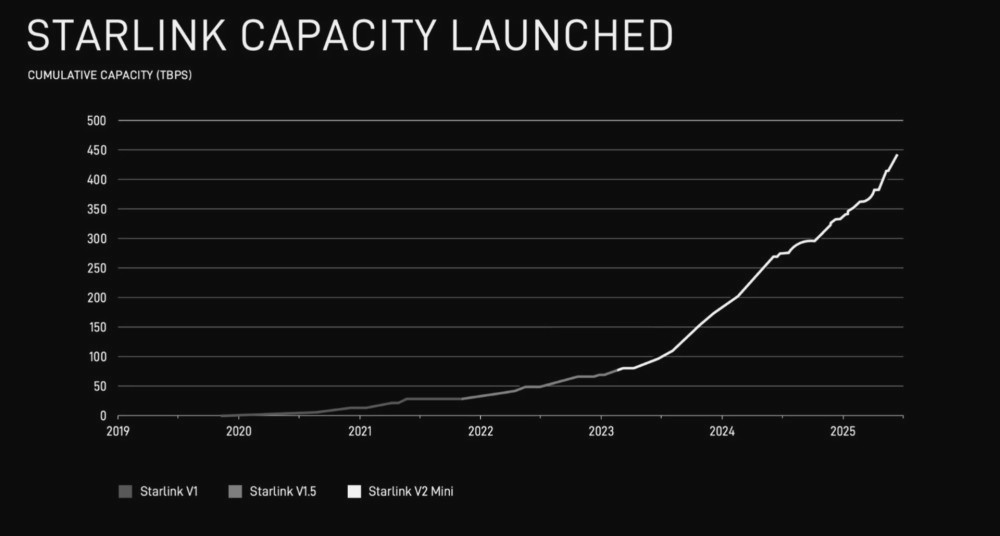
Currently, the total bandwidth of all active Starlink satellites is approximately 450 Tbps. Over the past year, Starlink has added more than 2300 satellites, expanded coverage to 42 new countries and territories, and increased its user base to over 6 million.
In the U.S., the average download speed during peak hours reaches 200 Mbps, with latency at 25.7 ms. Less than 1% of measurements exceed 55 ms. Starlink also boasts the largest ground infrastructure for satellite communication, with over 1500 antennas deployed across more than 100 locations in the U.S.
The network continues to show remarkable resilience, remaining operational during widespread power outages in Spain and Portugal, as well as supporting rescue operations during floods and wildfires in the U.S. and Canada. Some satellites are equipped with laser communication links for direct data transmission between devices without ground infrastructure.
By the end of 2025, Starlink plans to launch over 400 more satellites into polar orbits to enhance coverage in Alaska and other high-latitude regions.